Evo Defense
- 4.4
- Rating
- 500.00K
- Installs
- Free
- Price

 Analysis by App-foxy
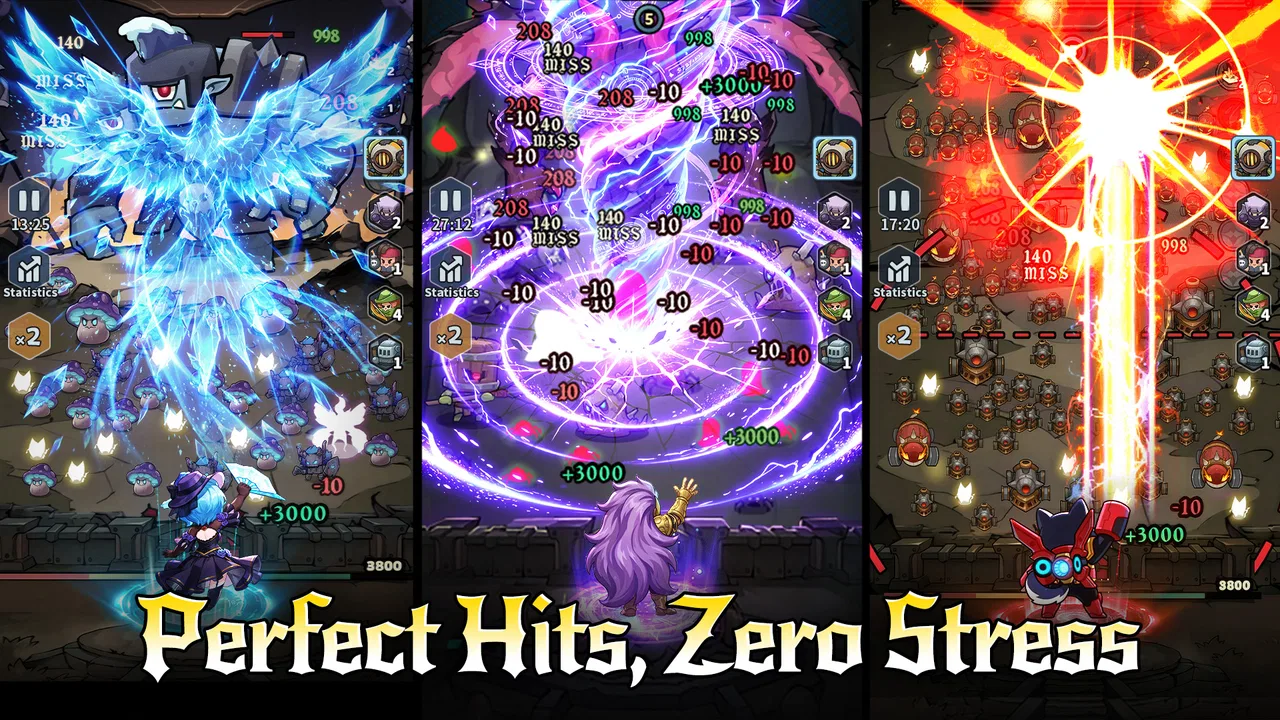
I spent time with Evo Defense: Lucky Survivor as a mobile role-playing game built around surviving repeated waves and making decisions under pressure. Its basic idea is easy to understand: enemies keep coming, your character grows during the run, and every choice can determine whether the next stretch is manageable or overwhelming. What makes it interesting is not the premise alone, but the way it asks you to think ahead while reacting to what appears in front of you.
The game is free to start, which makes it easy to try without committing money immediately. It comes from BLUE PLANET JOY and has reached a 4.5 average from around eleven thousand ratings, with more than one hundred thousand installs. Those figures suggest that the game has found an audience, but they do not replace the more important question: whether its loop suits the way you like to play. In my experience, it is best approached as a compact roguelike RPG for players who enjoy planning a build, accepting imperfect choices, and trying again after a run falls apart.
How each run turns simple choices into meaningful decisions
The first thing I noticed is how quickly the game puts attention on survival rather than on lengthy preparation. A wave-based structure gives every moment a clear purpose. You are not simply collecting upgrades because they look powerful; you are trying to create a setup that can handle the next escalation. That changes the way I evaluate rewards. A choice that seems weaker in isolation can be more useful if it covers a vulnerability in the current build.
You May Also Like

 Blood Strike: 2.5 Anniversary
Blood Strike’s Loadouts Turn Every Drop Into a Tactical Gamble
A close look at Blood Strike’s custom loadouts: how fast access to signature weapons reshapes its battle royale rhythm, rewards preparation, and narrows the gap between fights.

 Pandora - Music & Podcasts
Pandora’s Music Is Easy to Start, but Harder to Recover
Pandora’s strength is its low-effort path from a seed to a station. Its weak spot is how much confidence it asks you to place in connection, setup, and quiet recovery.

 8 Ball Pool
 Is Built on Rivalries, Rematches, and Routine
A close look at the rivalries, rematches, shared routines, and unanswered safety questions that turn a quick pool match into a persistent mobile community.

 Samsung Music
’s Quiet Strength Is Playing What You Already Own
Its reach comes less from spectacle than from dependable access to a personal library. That simplicity is both the app’s strongest retention engine and its ceiling.

 AccuWeather: Weather Radar
AccuWeather Review: A Quick, Clear Forecast for Everyday Decisions
For everyday plans, the best forecast is the one you can understand quickly. AccuWeather makes rain timing, radar, and local conditions easy to act on, with a few trade-offs.

 Hill Climb Racing
Why Hill Climb Racing Still Turns Crashes Into One More Run
A tiny car, a bumpy hill and one more upgrade: Hill Climb Racing keeps resurfacing because its simple chaos makes every near-miss feel personal.
More From Our News Desk
View All News


This is where the role-playing side matters. Progress during a run is not only about becoming stronger in a general sense. It is about deciding what kind of survivor you are building. Damage, durability, control and consistency all have different value depending on the threats around you and the tools already in your setup. I found myself asking whether I needed more immediate power or a safer foundation for later waves. That question is more valuable than simply selecting the option with the largest-looking benefit.
The game also benefits from the short-session nature of mobile play. I can imagine opening it during a break, completing part of a run, and returning later when I have more time. At the same time, the wave format creates a natural tension: stopping in the middle of a run is less satisfying than reaching a clear turning point. Players who want a completely relaxed experience may find the constant pressure tiring, especially when a promising attempt starts to unravel.
One practical habit helped me make better decisions: I stopped treating every reward as an emergency upgrade. Instead, I looked at the next few problems my build might face. If the current damage was already comfortable, improving survival or coverage could be more valuable than adding another offensive boost. If enemies were reaching me too easily, taking a flashy damage option only postponed the real problem. This kind of delayed thinking is one of the game’s strongest qualities.
Planning beyond the next reward
A common mistake in this type of game is building around the first useful option that appears. Evo Defense: Lucky Survivor rewards a longer planning horizon. I tried to keep a direction in mind without becoming so committed that I ignored better answers. That balance is important. A build needs an identity, but it also needs room to respond when the run offers something unexpected.
For example, I would rather choose a modest improvement that supports several future choices than take a powerful-looking upgrade that leaves the rest of the build confused. This is especially useful when a run has already developed a clear weakness. A strong offensive setup can still fail if it cannot deal with pressure from multiple directions, while a defensive setup may survive longer but lack the pace needed to finish dangerous waves.
The best decisions are often the ones that prevent a future problem rather than repair a present one. That is the mindset I would recommend to new players. Watch what repeatedly causes trouble, then use the next opportunity to address the pattern instead of chasing the most impressive individual reward.
There is also a trade-off between consistency and ambition. A safe choice can make the current section easier, but a more specialized choice may create a stronger build if the right follow-up appears. I enjoyed that uncertainty because it gives each run a different rhythm. Still, players who prefer clearly optimal paths may find the luck-driven structure frustrating when a promising plan does not receive the support it needs.
When taking a risk is actually worthwhile
The “Lucky” part of the name fits the way opportunity and uncertainty work together. A run can offer choices that invite you to gamble on a stronger future rather than settle for immediate stability. I learned to judge those risks according to the condition of the run. If my character was already struggling to survive, taking a speculative option usually made the situation worse. If the current setup was stable, I had more room to pursue a higher ceiling.
This creates a useful distinction between a calculated risk and a desperate one. A calculated risk is supported by a functioning build and a clear reason for deviating from safety. A desperate risk is often just a reaction to falling behind. The game does not make that difference for you; you have to recognize it yourself. That is a meaningful source of tension, particularly for players who enjoy roguelike games because they turn failure into a lesson.
I also found that risk should be judged by timing. An option that is excellent early in a run may be too slow when the next wave is already threatening. Conversely, a short-term defensive choice may be less exciting but can buy enough breathing room to reach better opportunities later. The right answer depends on whether the build needs to stabilize, accelerate or cover a specific weakness.
That makes the game more thoughtful than a simple “choose the biggest number” experience. I still had moments where luck felt decisive, and that is a real limitation. When several poor options appear in succession, careful play cannot always rescue the attempt. Players who dislike losing progress because of unfavorable choices should know that the roguelike structure is central, not a minor side activity.
Adapting instead of forcing one favorite build
My most useful improvement came from becoming less attached to a single preferred strategy. It is tempting to repeat the same approach every time, especially after a successful run. But a build that worked once may not fit the choices offered in the next attempt. I started each run with a broad intention, then adjusted it according to what actually became available.
This is also where the game can teach new players without lengthy explanations. A failed attempt often shows exactly what was missing. Perhaps the build had enough power but could not handle sustained pressure. Perhaps it survived comfortably but lacked the ability to end waves efficiently. Instead of seeing every defeat as bad luck, I found it more useful to identify the first point where the build stopped answering the game’s demands.
A good adaptation rule is to separate a temporary weakness from a structural one. If a problem appears once, it may be worth tolerating while waiting for a better option. If the same problem keeps returning, it deserves priority. This prevents overreacting to one difficult moment while still encouraging honest evaluation of the build.
The game is a better fit for players who enjoy that kind of adjustment than for people looking for a fixed campaign with a guaranteed sequence of upgrades. Traditional role-playing games often let you follow a stable class or equipment plan over many hours. Here, the pleasure comes from making the best of the current run. That difference is important when deciding whether to download it.
Another practical tip is to avoid spending every useful option immediately in your thinking. Even when the game presents a reward as an obvious improvement, I found it helpful to consider what the build would look like after the choice, not just before it. The real value of an upgrade is its interaction with everything else. A small improvement that completes a coherent direction can outperform a larger but isolated boost.
What keeps the loop interesting over time
The long-term appeal comes from learning how to make better decisions, not merely from repeating the same wave pattern. Each attempt gives you a chance to test a different balance between offense, defense and flexibility. I liked that a failed run could still improve my next one because it clarified which choices had been too narrow or too delayed.
That said, the depth will depend heavily on how much variety you personally want from a mobile RPG. Players who enjoy experimenting with builds and replaying a familiar framework may find plenty to think about. Players who need a large story, extensive exploration or a constantly changing world may find the focus too narrow. This is a survival-and-planning game first, not a replacement for a full-scale role-playing adventure.
The current version is 1.0.32, and the game is available for devices running Android 8.0 or later. I would still recommend checking how it feels on your own phone before investing serious time, because wave-based action can be less comfortable on a small screen or on older hardware. The game’s free entry point makes that trial relatively straightforward, but the presence of optional purchases means some players will want to decide early how strictly they intend to avoid spending.
Those purchases range from $0.99 to $99.99 per item. I would treat that as a reason to set a personal limit before playing rather than as a reason to dismiss the game automatically. The core appeal is the run itself, so I would only spend if an optional item genuinely improves convenience or enjoyment for you. Anyone who prefers a completely purchase-free mobile experience should approach with caution, even though the game can be started without paying.
Who should play it, and who should skip it
I would recommend this game to someone who likes roguelike RPGs, wave survival and decisions that become more valuable when made several steps in advance. It is particularly suitable for players who enjoy asking why a run failed and changing their approach next time. The Teen content rating also places it in a category better suited to older children and adults than to very young players.
A realistic everyday use case would be a short commute or a quiet break when you want something more engaging than a passive time-filler. I would begin a run with a simple goal, such as testing a more defensive approach, then use the available choices to see whether that plan could survive pressure. If I only had a few minutes, I might prefer a game with faster, more disposable rounds, because this one is more satisfying when I can follow the run through a meaningful stage.
I would skip it if you want a story-led role-playing game with dialogue, exploration and a strong sense of place. I would also look elsewhere if random rewards make you feel that planning is pointless. The game gives planning real value, but it does not remove uncertainty. Likewise, players who dislike repeating attempts after failure may find the central loop more exhausting than rewarding.
Compared with a conventional RPG, this game compresses character development into repeated survival decisions. Compared with a straightforward tower-defense title, it puts more emphasis on the growth and direction of the survivor rather than on arranging a permanent battlefield. Neither comparison is perfect, but it explains the appeal: the game sits between active survival pressure and build-focused role-playing, with the roguelike reset providing its replay value.
My verdict on the strategy behind the fun
After spending time with it, I see Evo Defense: Lucky Survivor as a focused mobile RPG that succeeds when you treat every run as a planning exercise rather than a race toward the strongest-looking reward. Its best moments come from recognizing a weakness early, accepting a sensible trade-off, and watching that decision pay off several waves later. I also appreciate that failure can be informative when I take the time to examine the choices that led there.
Its limitations are just as clear. Luck can disrupt a careful plan, repeated runs may feel narrow to players who want broader content, and the optional purchase range means budget-conscious players should keep an eye on their spending habits. The game is not ideal for someone seeking a calm, guaranteed progression path or a large narrative adventure.
For me, the deciding strength is the quality of its decision space. It gives a simple survival premise enough room for timing, adaptation and trade-offs to matter. I would recommend trying it free if you enjoy roguelike experimentation and do not mind rebuilding after a failed attempt. It is most rewarding when you play patiently, plan for the next problem, and let each run teach you something useful.
FAQs for Evo Defense
01What is the main objective of Evo Defense: Lucky Survivor?
Evo Defense: Lucky Survivor is a strategic tower defense game where players aim to protect their base from waves of enemies. The primary objective is to strategically place and upgrade towers to fend off increasingly difficult enemy waves while managing resources effectively to enhance your defense capabilities.
02Is Evo Defense: Lucky Survivor free to play?
Yes, Evo Defense: Lucky Survivor is free to download and play. However, it does offer in-app purchases for players who wish to enhance their gaming experience. These purchases can include additional resources, special towers, and other premium features that can accelerate progression within the game.
03What platforms is Evo Defense: Lucky Survivor available on?
Evo Defense: Lucky Survivor is available on both Android and iOS platforms. You can download the game from the Google Play Store or the Apple App Store, making it accessible to a wide range of smartphone and tablet users who enjoy strategic gaming experiences.
04Does Evo Defense: Lucky Survivor require an internet connection?
While Evo Defense: Lucky Survivor can be played offline, some features such as in-game events, leaderboards, and social sharing options may require an active internet connection. Playing offline will allow you to enjoy the core gameplay but might limit access to certain online-exclusive features.
05Are there any age restrictions for playing Evo Defense: Lucky Survivor?
Evo Defense: Lucky Survivor is suitable for a wide audience, but it is generally recommended for players aged 12 and above due to its strategic complexity and mild fantasy violence. Parents should review the content and ensure it aligns with their preferences for their children’s gaming activities.
Pros
- Engaging gameplay with strategic depth.
- Vibrant graphics enhance user experience.
- Frequent updates add new challenges.
- Offline mode available for on-the-go play.
- Intuitive controls make it easy to learn.
Cons
- In-app purchases can be pricey.
- Occasional ads disrupt gameplay.
- Requires regular updates for new content.
- High battery usage during long sessions.
- Limited customization options for characters.

Evo Defense
Gallery